FIFA World Cup 2026 Health & Safety Intelligence
Real-time health risk monitoring across 16 host cities, 104 matches, and 48 teams.
! ELEVATED RISK: 5 cities at critical risk, 9 with elevated signals. Real-time health monitoring across all 16 host cities.
FIFA WATER BOTTLE BAN: Reusable water bottles banned from all 16 stadiums. 14 of 16 venues projected to reach dangerous heat levels. Know your heat safety plan before you go.
Last updated: 2026-06-19
Now Live on Virus Watcher
Full health intelligence for FIFA World Cup 2026 - now available. Track city-level risks, match schedules with health context, and get real-time briefings.
Use our Web App or Android app below.
Live App Features
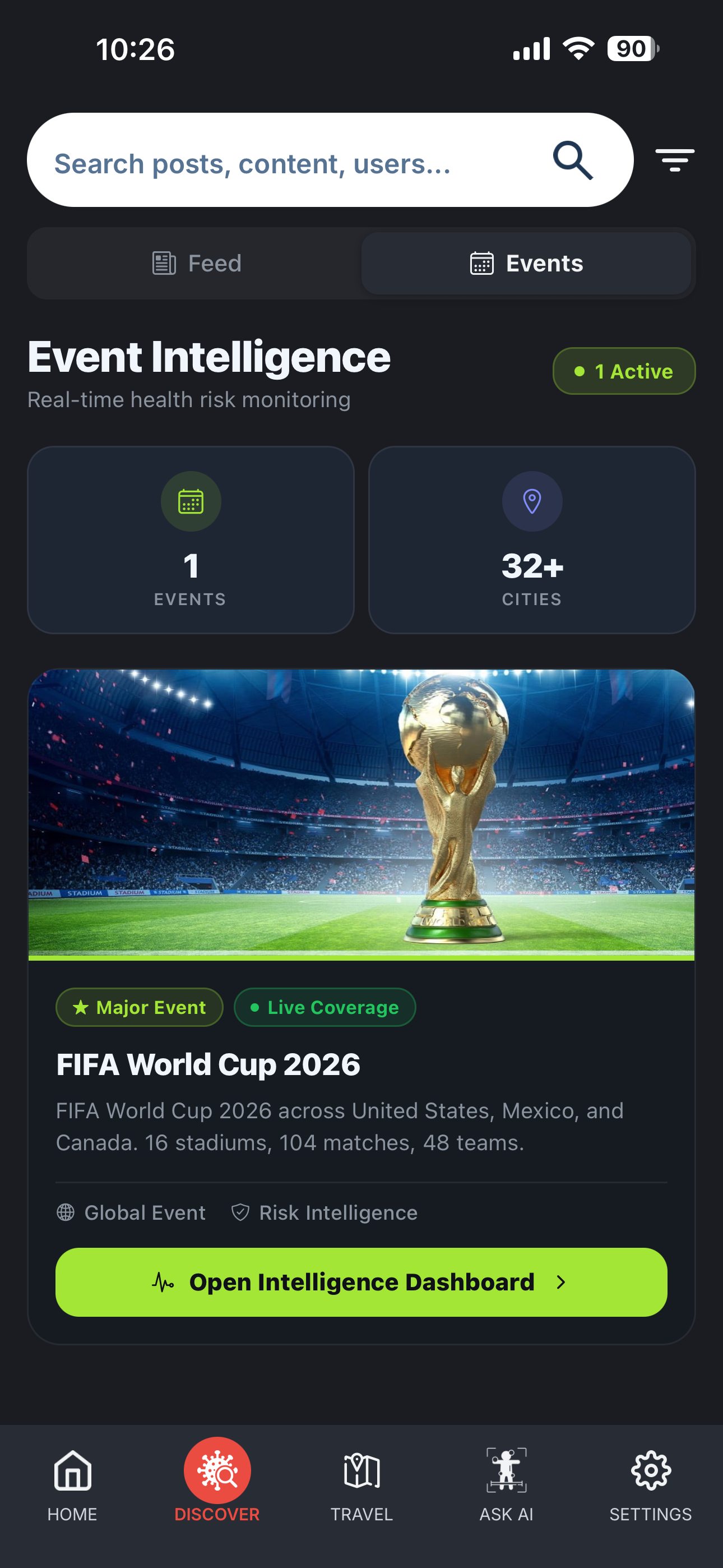
Event Intelligence Dashboard
Live coverage with 1 active event across 32+ cities
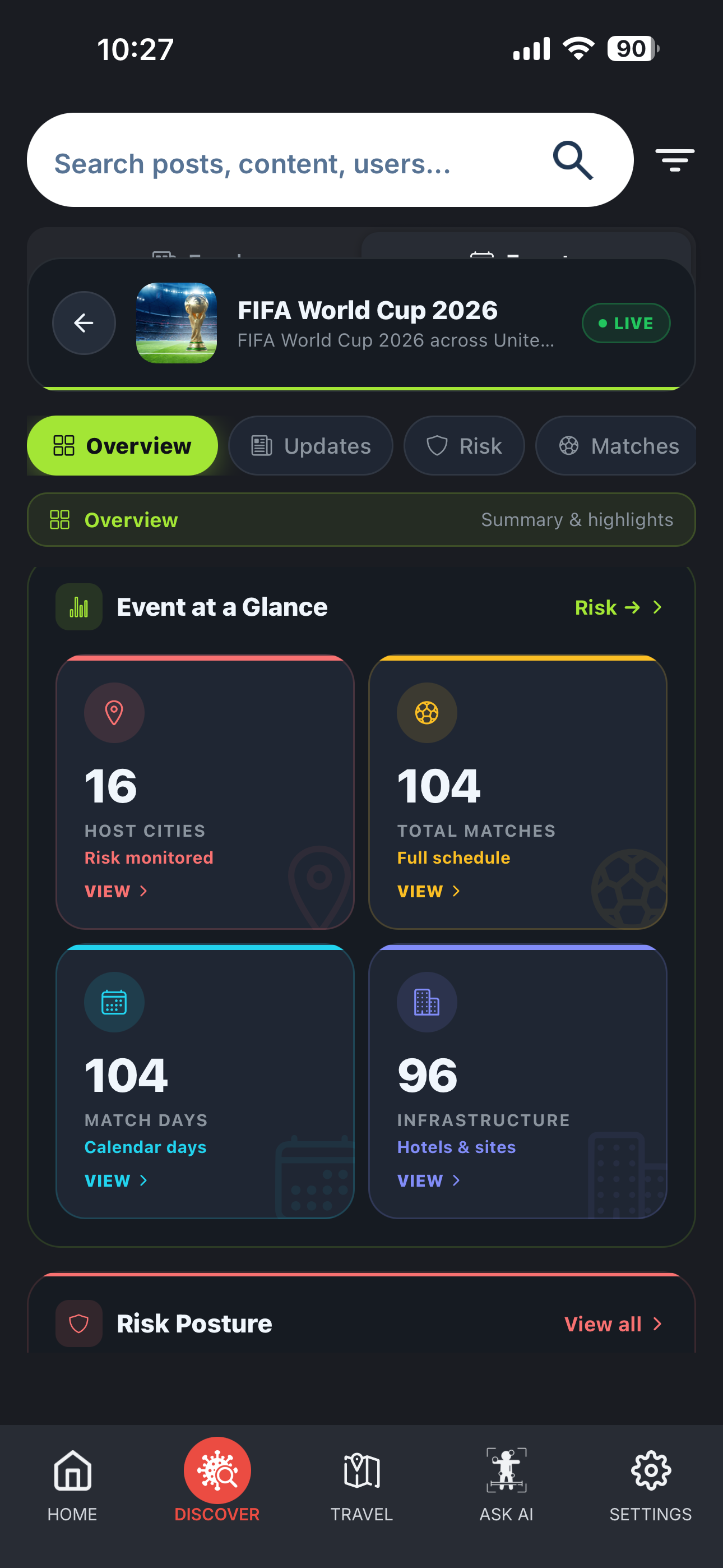
Event at a Glance
16 host cities monitored, 104 match days, 96 infrastructure sites tracked
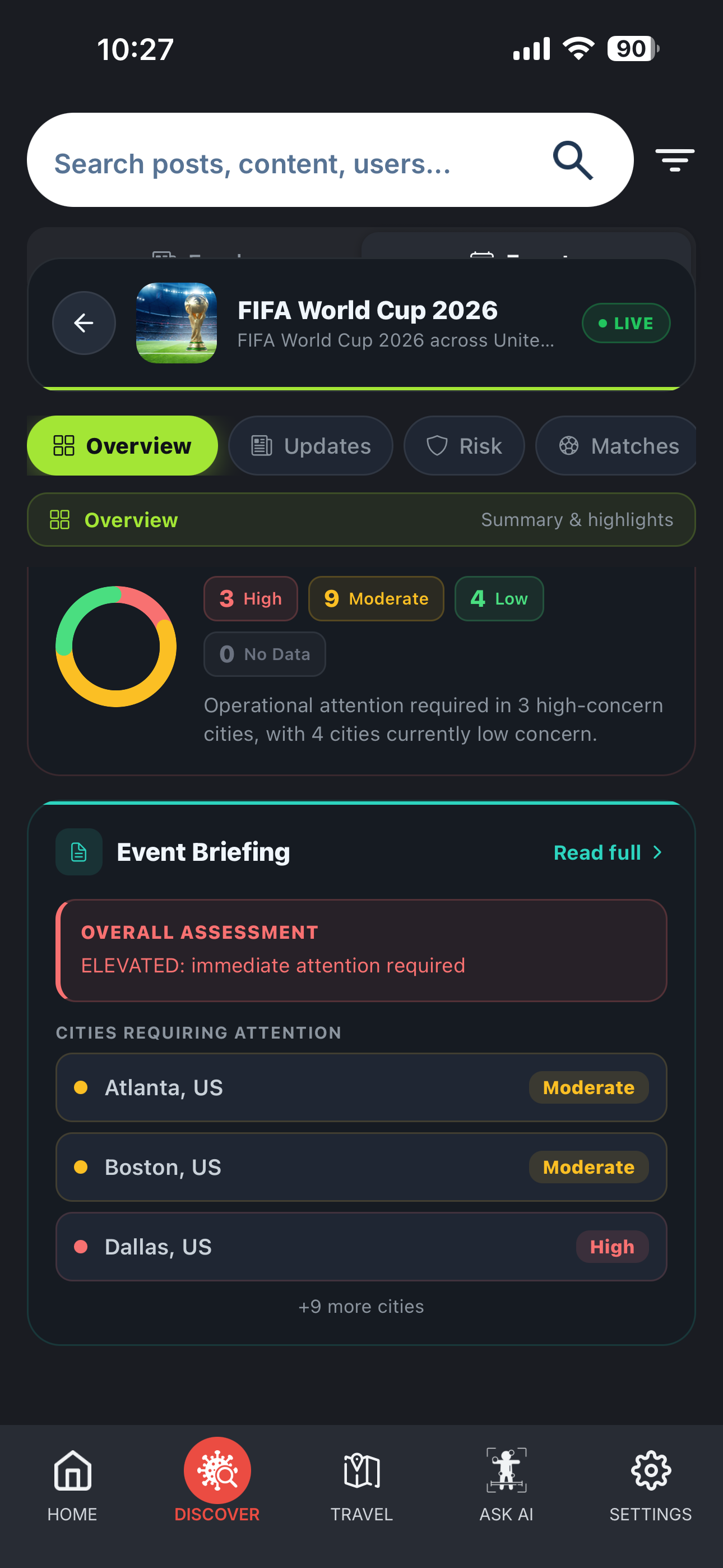
Health Risk Posture
3 high-concern cities, operational attention required
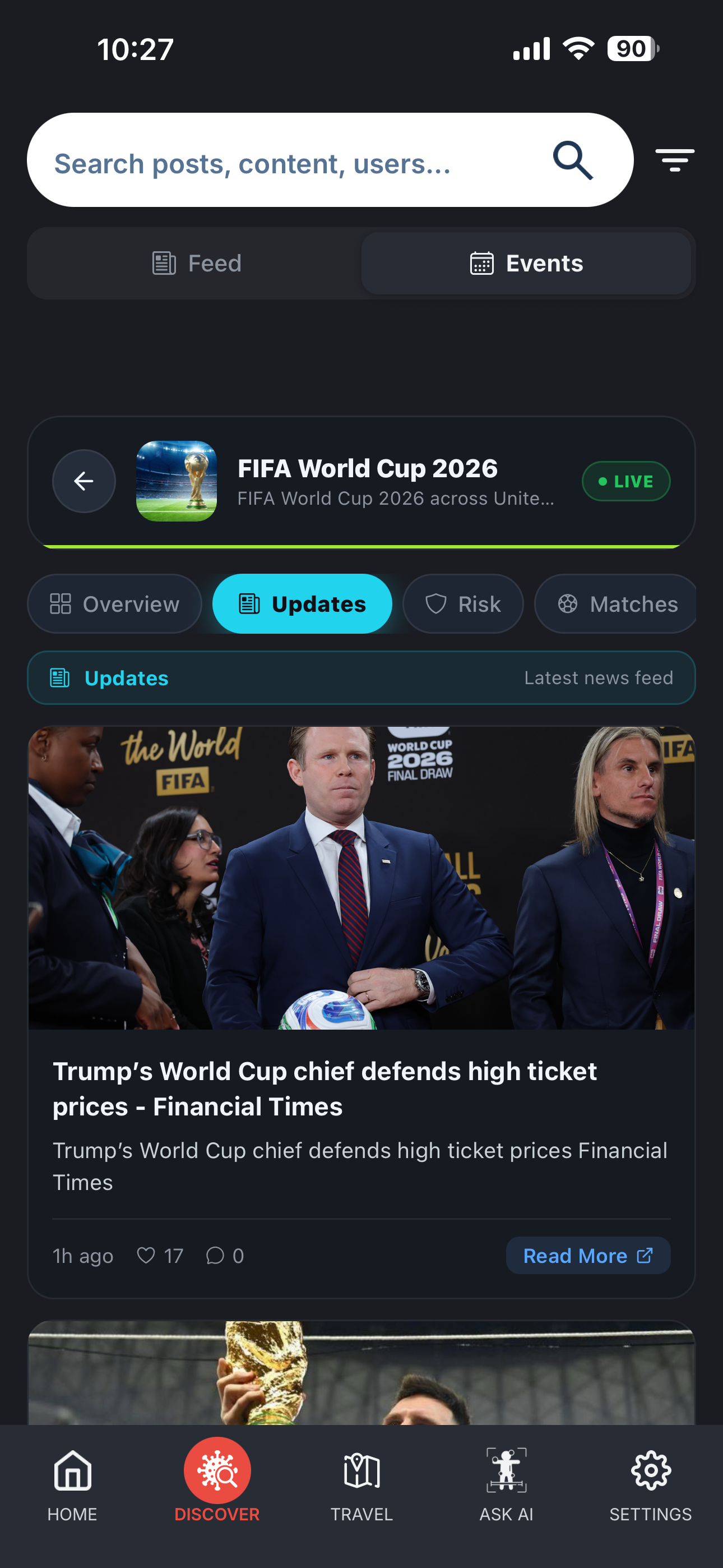
Real-Time Updates
Latest news feed with breaking stories and developments
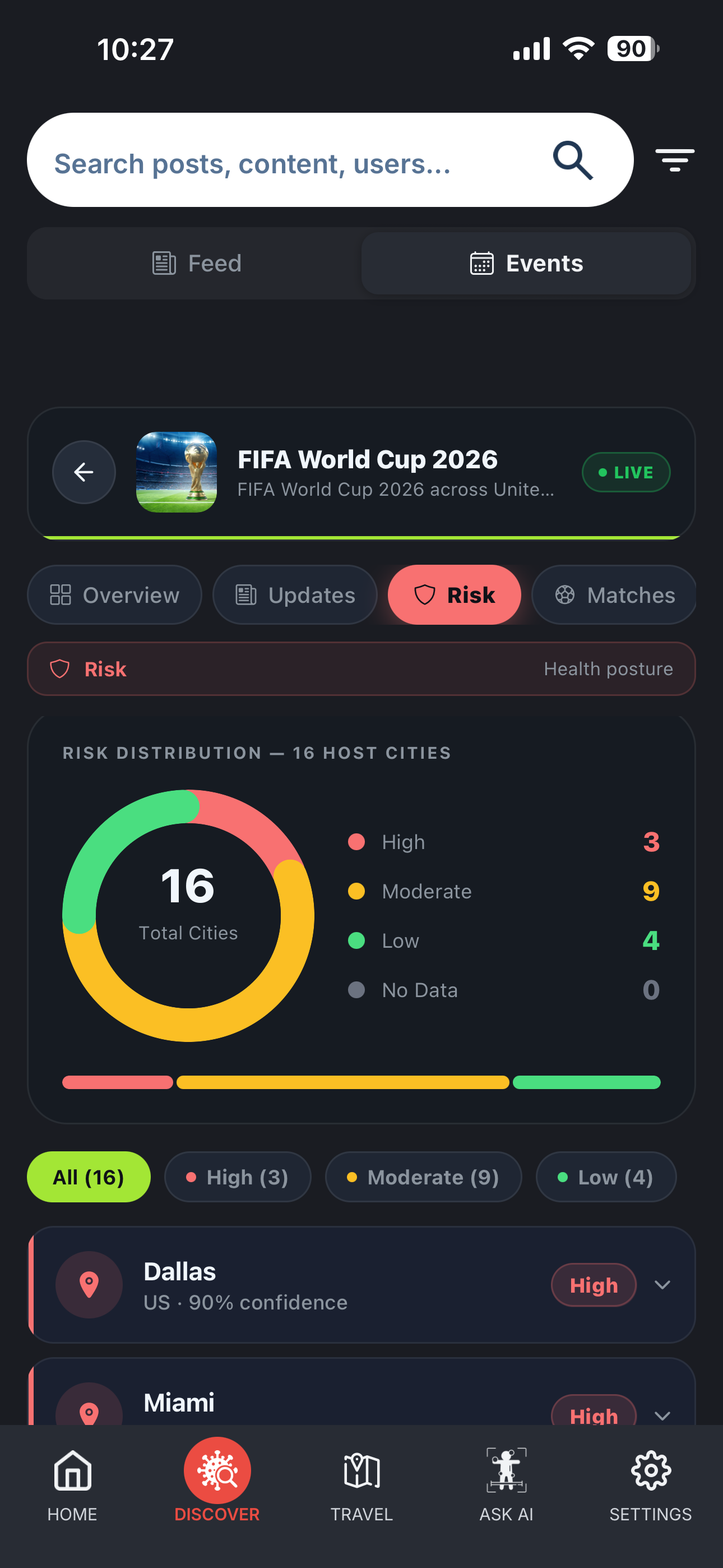
City-Level Risk Analysis
Filter by risk level: Critical (Guadalajara, Mexico City, Miami, Monterrey, Philadelphia)
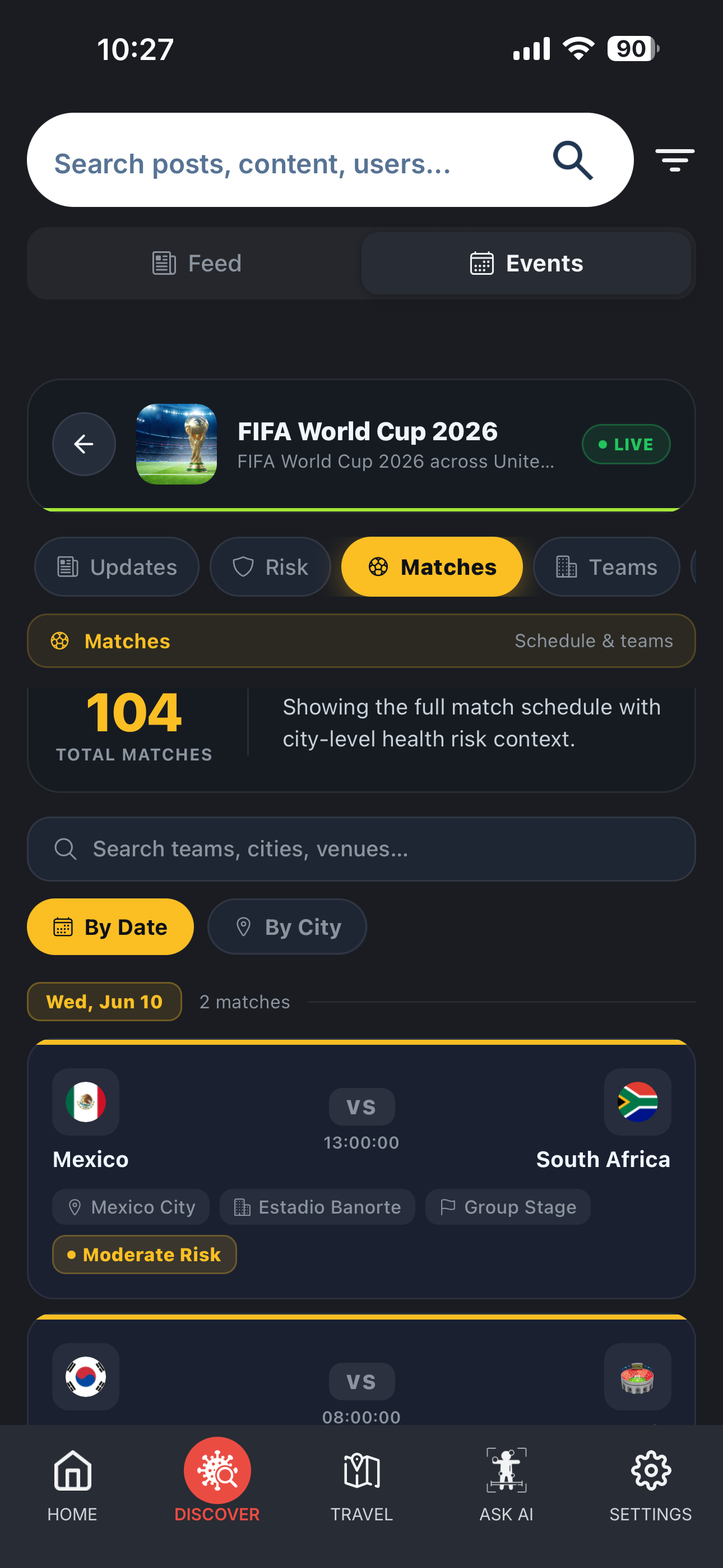
Match Schedule + Health Context
104 total matches with city-level health risk indicators
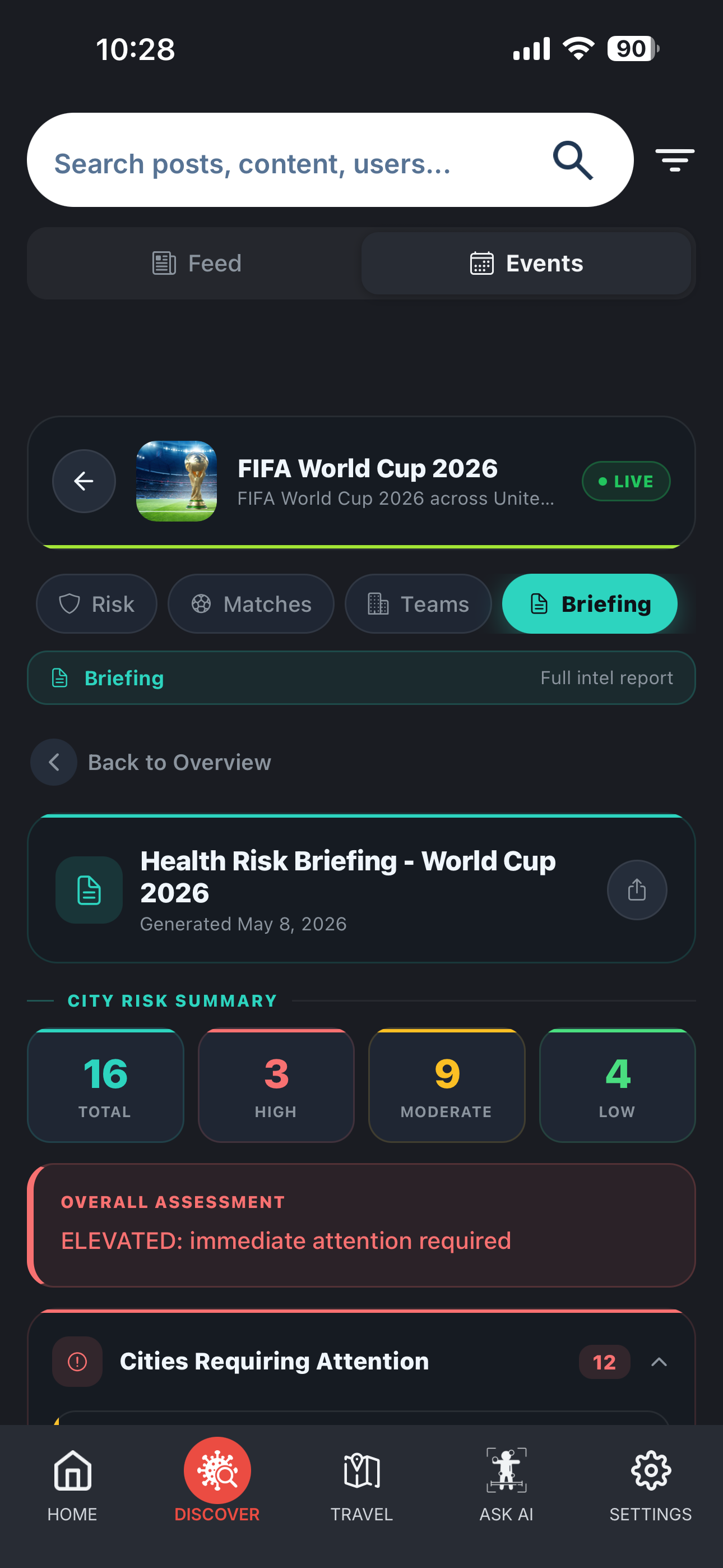
AI-Generated Health Risk Briefings
Comprehensive intelligence reports generated daily covering:
- Overall assessment and attention level
- Cities requiring immediate attention
- Risk distribution across host cities
- Confidence scores and data sources
FIFA Water Bottle Ban & Heat Danger - World Cup 2026
Breaking - June 2026What FIFA Announced
- Reusable water bottles banned from all 16 stadiums and official fan zones - replacing a prior policy that allowed them.
- 14 of 16 venues are projected to reach health-risk temperature levels during matches.
- Players receive 3-minute mandatory hydration breaks during matches. Fans do not have equivalent protections inside stadiums.
- Misting stations will be provided outside venues. Inside, fans must purchase sealed single-use bottles.
Heat Risk by City
Fan Heat Safety Guide
At the Stadium
- Arrive early to acclimate before kickoff
- Buy water immediately upon entry - lines get long
- Seek shade during warmup and halftime
- Know the location of first aid stations
Warning Signs of Heat Illness
- Heavy sweating, weakness, cold clammy skin → heat exhaustion
- No sweating, hot red skin, confusion → heat stroke - call 911
- Rapid heart rate, nausea, headache
- Fainting or loss of consciousness
What to Bring
- Electrolyte packets (allowed in sealed pockets)
- Hand-held battery fan
- Cooling towel
- Light-colored, loose-fitting clothing
- Sunscreen SPF 50+
If Someone Collapses from Heat at a Match
- Call 911 immediately - heat stroke is a medical emergency
- Move the person to shade or an air-conditioned area
- Cool them rapidly: remove outer clothing, apply cold wet cloths to neck, armpits, and groin
- Do NOT give fluids if unconscious
- Stay with them until emergency services arrive - first aid stations are at every venue
Sources: FIFA official announcement, CDC Heat Safety Guidelines, Crisis24 World Cup Risk Assessment, PAHO. Updated June 2026.
16 Host Cities Monitored
Real-time health intelligence across United States, Mexico, and Canada
Atlanta
US
Boston
US
Dallas
US
Guadalajara
MX
Houston
US
Kansas City
US
Los Angeles
US
Mexico City
MX
Miami
US
Monterrey
MX
New York / New Jersey
US
Philadelphia
US
San Francisco Bay Area
US
Seattle
US
Toronto
CA
Vancouver
CA
Risk Levels
-
High RiskOperational attention required
-
Moderate RiskEnhanced monitoring
-
Low RiskStandard precautions
-
No DataAssessment pending
Frequently Asked Questions
Is it safe to attend FIFA World Cup 2026?
Virus Watcher provides real-time health risk intelligence across all 16 host cities. While most cities maintain moderate to low risk levels, we monitor conditions daily to keep fans informed. Dallas and Miami currently show elevated health concerns requiring operational attention.
What health risks should I be aware of?
Health risks vary by host city and include disease outbreaks, heat illness, cardiac events, food-borne illness, air quality issues, and extreme weather. Medical emergencies at stadium events commonly include heat exhaustion, dehydration, and alcohol-related incidents. Our AI-powered surveillance monitors 50+ health agencies to identify risks weeks before they become serious.
Are World Cup 2026 stadiums safe after recent safety rankings?
Stadium safety varies significantly across host cities. According to recent safety assessments, Kansas City's Arrowhead Stadium ranks as the most dangerous venue, while MetLife Stadium in New Jersey is rated the safest.
Common medical emergencies at FIFA World Cup stadiums include cardiac events, heat illness, injuries, food-borne illness, and alcohol-related incidents. Heat and dehydration are among the leading causes of fan medical emergencies at outdoor matches. Our platform monitors health risks specific to each venue to keep you informed.
How often is the risk data updated?
Our health intelligence dashboard updates continuously, with AI-generated briefings produced daily. Match-specific risk assessments are refreshed every 24 hours leading up to game day, ensuring fans have the latest information for travel planning.
Which cities have the highest health risks?
Current intelligence shows Dallas and Miami as high-risk cities (90% confidence) requiring immediate operational attention. Kansas City (Arrowhead Stadium) has been flagged for stadium safety concerns. Atlanta and Boston maintain moderate risk levels. Risk levels can change based on outbreak activity, weather events, and local health department alerts.
With FIFA 2026 final tickets at $33,000, are health risks worth considering?
With FIFA tripling ticket prices (best seats now $33,000 for the final), understanding health and safety risks becomes even more critical. Large crowds increase exposure to disease outbreaks, heat-related illness, and medical emergencies. Events that attract massive crowds can strain local hospitals and emergency services. Know the risks before investing in expensive tickets.
How can I get match-specific health alerts?
Download the Virus Watcher app to receive instant push notifications when health activity increases in your selected host cities. Set up custom alerts for specific matches, teams, or venues to stay informed throughout the tournament.
What makes Virus Watcher's intelligence different?
We provide weeks of advance notice through AI-powered monitoring of global health surveillance networks and 50+ national health agencies. Unlike traditional news sources that report after outbreaks peak, our platform detects signals early, giving you time to adjust travel plans or take precautions.
Stay Ahead of Health Risks During World Cup 2026
Get real-time alerts, city-level risk intelligence, and match-specific health briefings. Open Virus Watcher and experience the tournament safely.
Use our Web App or Android app below.